Prediction: Great CMOs Are About to Become Much More Expensive
AI is making marketing execution abundant. The leaders who know what deserves to exist will command a premium.


There is a popular assumption that AI will reduce the value of marketers.
I believe the opposite will happen, at least for the best ones.
Over the next decade, the compensation gap between average and exceptional marketing leaders will widen dramatically.
Companies will need fewer people whose primary value comes from writing first drafts, producing campaign variations, resizing creative, assembling reports, and moving work from one stage to another. Much of that execution will become faster, cheaper, and increasingly automated.
But as the cost of execution falls, the value of judgment will rise.
We can already see the economics beginning to change.
In 2024, Klarna reported that AI helped the company produce more campaigns while reducing its marketing agency spending by 25 percent. The company estimated that its use of generative AI in marketing would save approximately $10 million annually. Creative development that once took six weeks could reportedly be completed in seven days.
 Adrianne Pasquarelli
The immediate conclusion might be that marketing leadership will become less valuable.
I think Klarna points toward the opposite conclusion.
When a company can produce more campaigns with fewer resources, each decision travels further. One leader can influence more messages, markets, channels, and customer interactions than an entire marketing department could manage before.
That concentrates leverage.
The best CMOs will become more valuable because they possess something AI cannot easily reproduce: the judgment to make consequential decisions on behalf of a brand.
They know which customer truth is worth building around. They can distinguish an original idea from a polished imitation. They understand when data is useful and when it is misleading. They know when to move quickly, when to involve legal, when to challenge consensus, and when to kill an idea everyone else in the room already loves.
Most importantly, they are accountable for what happens next.
The future CMO will not be paid primarily for how much marketing the organization produces.
They will be paid for the quality of judgment exercised across everything it could produce.
AI solved the production problem. It exposed the judgment problem.
Imagine a group of marketers gathering to brainstorm the brand’s next campaign.
Several people open Claude and ask for the top ten ideas. Within seconds, they have options. They select the most promising directions and ask for variations.
By the end of the hour, the team has hundreds of headlines, dozens of scripts, countless images, and enough social content to fill the calendar for months.
The technology is working exactly as intended.
This is where the real work begins.
Which ideas genuinely represent the brand? Which ones are actually original? Which claims can be supported? Which stories feel unmistakably human? Which variations add something meaningful rather than merely something different?
Perhaps more importantly, which ideas should be killed on the spot?
For most of marketing history, making content was expensive. It required time, equipment, specialized skills, and access to distribution.
Because production was difficult, we built our organizations around producing more efficiently.
AI has removed much of that friction.
What it has not removed is the responsibility of deciding what deserves another person’s attention.
More content was never the purpose.
The purpose was to help someone understand something, believe something, feel something, remember something, or do something. Content was simply the vehicle. Storytelling gave it meaning.
Generative AI has separated production from purpose. It allows us to create something without first proving that it deserves to exist.
That changes the most important question a marketer can ask.
For years, the question was:
“Can we make this?”
Now it is:
“Should we?”
Polished does not mean right
Apple learned how consequential that distinction can be.
In 2024, the company released “Crush!”, an advertisement for the new iPad Pro. The spot showed a hydraulic press destroying musical instruments, cameras, books, sculptures, paint, and other symbols of human creativity. When the press lifted, only the new iPad remained.
The intended message was clear: all these creative capabilities could now fit inside one impossibly thin device.
But many people saw something else.
At a moment when artists already feared being displaced by technology, Apple appeared to celebrate a machine literally crushing the tools of human creativity.
The advertisement was beautifully produced. The metaphor was easy to understand. The product benefit was visible.
And the meaning was wrong.
Apple apologized and canceled plans to run the advertisement on television.
 Dan Milmo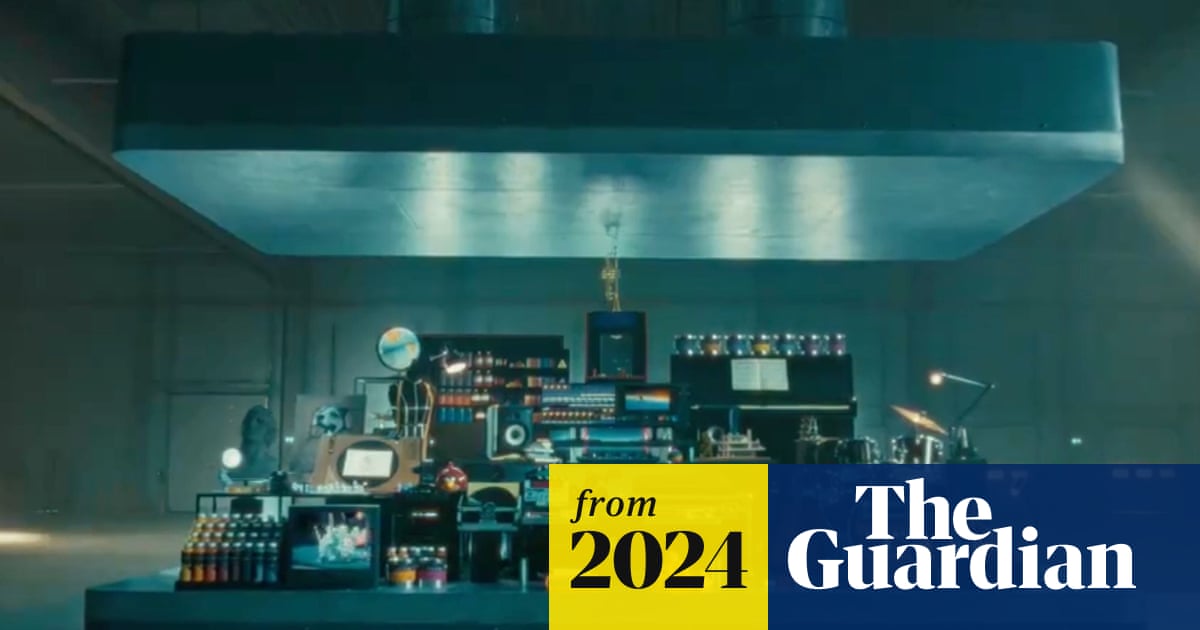
The team proved it could make the advertisement.
The question it failed to answer was whether this was what Apple should communicate at that particular moment.
AI makes that distinction more important because it can produce work that appears complete. The writing is clean. The visuals are polished. Even ordinary ideas arrive wearing the appearance of confidence.
Bad content used to be easier to recognize. Weak ideas often looked weak.
The most dangerous content in the AI era will look perfectly acceptable.
It will be accurate enough to survive review, familiar enough to avoid objections, and polished enough to publish. It will offend no one because it says very little. It will enter the world, occupy a little space, and disappear.
No single piece will cause much harm. Collectively, however, this content will teach audiences that the brand has nothing worth hearing.
Every company will become innovative, customer-centric, forward-thinking, and committed to excellence.
The content may remain technically on-brand while becoming indistinguishable from everything around it.
Consistency without conviction is just repetition.
Brand meaning does not belong entirely to the brand
AI did not create the judgment problem. It is exposing and accelerating one that already existed.
Consider what happened at Cracker Barrel.
In August 2025, the company introduced a simplified logo that removed the familiar image of the man seated beside a barrel.
On its own, the redesign was clean, modern, and professionally executed.
That was precisely the problem.
Cracker Barrel was not merely removing an illustration. It was removing a symbol customers associated with familiarity, nostalgia, and a particular idea of American hospitality.
The company saw a visual identity in need of modernization.
Many customers saw the brand abandoning something they believed it had promised to preserve.
The backlash was immediate. Within days, Cracker Barrel reversed the decision and restored its “Old Timer.” The logo reversal became a case study in what happens when a professionally executed decision misreads the meaning customers have attached to a brand.
 Kelly McCarthy and Melanie Schmitz and Meredith Deliso
The lesson is not that brands should never change. Nor is it that the loudest customers should control every decision.
The lesson is that brand meaning does not live entirely inside the organization.
It lives in the memories, rituals, and expectations customers have accumulated around it. A decision can be strategically defensible, beautifully designed, and consistently presented, yet still violate what people believe the brand means.
Someone inside the room needed to ask a different question.
Not simply:
“Does this look better?”
But:
“What are we removing, and do we understand why people care about it?”
That is judgment.
There is no evidence that AI caused Cracker Barrel’s decision. That is what makes the example important.
Organizations already struggle to exercise consistent brand judgment when evaluating a small number of major decisions. AI will multiply the number of decisions reaching them.
Without a stronger system for judgment, speed will only help brands make the wrong decision faster.
When production expands, judgment becomes the bottleneck
The promise of automation has always been simple: machines will do more of the work and give people their time back.
Sometimes they do.
But when production accelerates and the surrounding organization remains unchanged, the work does not disappear.
It moves downstream.
Ten concepts become hundreds of concepts that must be reviewed.
Five ad variations become fifty variations that must be compared.
A handful of customer videos becomes thousands of submissions that must be understood, cleared, evaluated, organized, approved, distributed, and measured.
Every new asset creates a new set of decisions.
Is it accurate? Is it relevant? Do we have permission to use it? Does it reflect the brand? Is it appropriate for this audience? Does it contain a claim? Who needs to approve it? When should it be retired?
CNET encountered this problem when it experimented with an internally developed AI system for financial explainers.
The system helped produce 77 articles. Following an audit, CNET added corrections to 41 of them. Some required minor changes. Others contained significant factual problems. Editors then had to review and correct content the system had made easier to produce.
 Igor Bonifacic
The writing became faster.
The responsibility for accuracy did not.
Production had moved the work from creation to verification, with the added cost of putting the publication’s credibility at risk.
This is what many marketing organizations are about to experience.
At small volumes, teams can manage judgment manually. A social manager opens every file, reads every caption, checks a spreadsheet, messages legal, and makes the best decision possible.
At machine-generated volumes, that approach collapses.
Human attention cannot expand at the same rate as machine production.
A company may save 90 percent of the time it once spent creating content, only to lose that time reviewing content that never needed to be created in the first place.
Approval queues grow. Legal becomes a bottleneck. Brand leaders are asked to react to endless variations. Eventually, teams begin approving content not because it is excellent, but because there is too much of it to consider carefully.
Production accelerates.
The organization does not.
A faster machine does not automatically create a wiser organization.
Human taste is important. It is not a system.
The popular answer is that humans must preserve taste.
That is true, but incomplete.
Taste works when a creative director is choosing among three campaign concepts. It becomes harder to depend on when thousands of assets are moving across teams, agencies, markets, languages, and channels.
One person may consider a customer video authentic. Another may consider it careless. A statement viewed as harmless in one market may require regulatory review in another. A story suitable for organic social may create unacceptable risk when used in paid media.
At enterprise scale, “I know good content when I see it” is not enough.
Organizations must turn judgment into something others can understand and apply.
What does this brand believe?
What is it unwilling to say?
What makes a story trustworthy?
Which claims require evidence?
What must remain untouched when a customer’s story is edited?
What permission is required for each use?
Which decisions can a machine make, and when must a human remain accountable?
Answering these questions does not limit creativity. It gives creativity a safe place to move.
Taste is personal.
Governance is shared judgment made operational.
This is also why merely putting a human in the loop is not enough.
Which human? Reviewing what? Against which standards? With what context? Authorized to make which decisions? Escalating uncertainty to whom?
A reviewer without clear principles, sufficient information, or decision-making authority is not governance.
It is a person absorbing the organization’s ambiguity.
Real governance begins earlier. Leaders establish what the brand believes, what it wants to protect, which risks require escalation, and which uses require deeper review. Technology carries those decisions consistently and surfaces the exceptions. Humans focus their attention where empathy, uncertainty, interpretation, or consequence makes human judgment necessary.
The goal is not to remove people from the process.
It is to stop using human attention as a substitute for infrastructure.
The best AI may be the AI that can say no
Most AI systems are designed to give us something.
Ask for an idea, and they provide one. Ask for fifty, and they provide fifty. Ask for something shorter, funnier, bolder, or more emotional, and the machine keeps producing.
Over time, we begin to associate intelligence with output.
But in a world of infinite production, the most valuable system may not be the one that always creates something.
It may be the one that knows when something should stop.
A responsible content system should sometimes tell us:
This claim cannot be verified.
We do not have permission to use this asset that way.
This edit changes what the customer meant.
This idea could have come from any brand.
This variation adds nothing meaningful.
This content should not move forward.
A system that approves everything is not intelligent.
It is merely fast.
Dove has turned this kind of restraint into an explicit brand position. In 2024, the company updated its Real Beauty Pledge and committed not to use AI-generated imagery in place of real women.
Dove did not reject AI entirely.
It established a boundary around a part of its brand promise that it believed technology should not replace.
That boundary communicates something.
When every company can fill every channel with endless variations, the brands that choose carefully will feel different. Their language will be more specific. Their stories will carry more evidence. Their presence will feel deliberate rather than automatic.
Audiences may never see the governance behind the content.
But they will feel its effects.
Trust is built partly through what an organization says.
It is also built through what it refuses to say.
The future marketer is an orchestrator
A marketing leader once told me, “I want to be the orchestrator, not the executor.”
She did not want to spend her time chasing files, resizing assets, searching for usage rights, reviewing spreadsheets, or manually carrying content between disconnected systems.
She wanted to decide what mattered.
That is what AI should make possible.
But orchestration means more than telling machines what to produce. It means deciding what the organization believes, aligning people around a standard, and creating the conditions for good work to move responsibly.
An orchestrator understands the whole system.
She knows when a customer story carries more authority than a campaign. She knows when professional production is the right choice. She knows which decisions can be automated and which require human care. She recognizes when more content would help and when restraint would say more.
The executor asks:
“How quickly can we make this?”
The orchestrator asks:
“Why should this exist, and what must be true before it moves?”
AI gives marketers leverage over execution.
What they do with that leverage will reveal the quality of their judgment.
This is why great CMOs will command a premium
Execution is becoming cheap.
Accountable judgment is not.
The most valuable marketing leaders will no longer be those who can supervise the largest content operation. They will be those who can give a smaller, AI-enabled organization clarity about what it should create, what it should protect, and what it should refuse to publish.
Their judgment will travel further than ever before.
A single decision may shape thousands of AI-generated outputs. One standard may govern customer content across hundreds of locations. One failure of judgment may be replicated across every channel before anyone realizes what happened.
This creates enormous leverage, both positive and negative.
The executives capable of carrying that responsibility will be rare.
The market will pay accordingly.
If your organization could produce ten times more tomorrow, would it know what not to publish?
Could it distinguish a true statement from a plausible one, preserve the meaning of a customer’s story, and route uncertainty to the right person?
If not, you do not have a production problem.
You have a judgment problem.
AI makes production abundant. That gives every consequential marketing decision greater reach.
The best marketing leaders will not become more expensive despite AI.
They will become more expensive because of it.
About Scale Social AI
Scale Social AI is building world's first AI-native content infrastructure for authentic enterprise brands.
We help organizations capture real human experiences, secure the necessary rights, preserve traceability, and use AI to evaluate, curate, and deploy content without manufacturing the underlying truth.
Learn more about Scale Social AI →
Earned, Not Bought is for marketing leaders navigating AI, authentic content, social operations, and the future of brand building. Join CMOs, brand leaders, and social teams receiving original perspectives and practical frameworks from Scale Social AI.